
Fatty liver: A disease of our time
Dimitris Kountouras
Fat in the liver is produced naturally and continuously, from the final components of food after digestion, namely sugars, amino acids and various fatty acids, and accumulates within the liver cells, until it is transported to the tissues to be burned or stored in adipose tissue. Part of this production is due to lipogenesis of adipose tissue, which has a variable fat capacity. When there are excess calories (too much food) or a lack of calories (hunger), hepatic fat production increases.
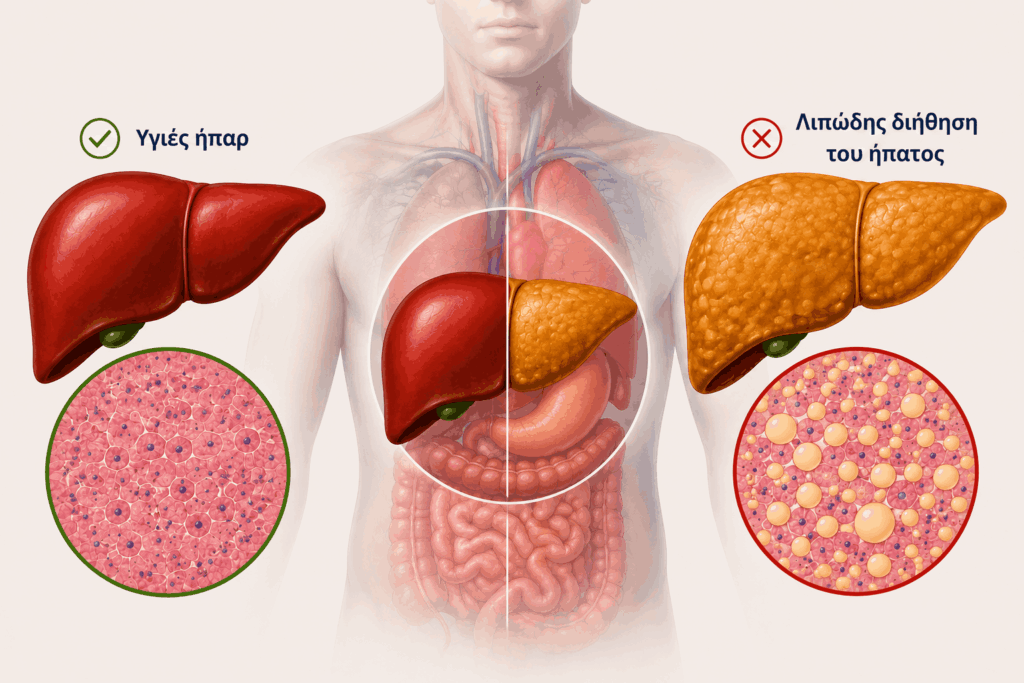
Fatty liver is characterized by excessive accumulation of fat in the liver and is defined by the presence of steatosis in >5% of hepatocytes (by biopsy, MRI or ultrasound). It affects a growing proportion of the world’s population, over 30%, more women, with a distinct genetic burden. Of these, 7 to 60% show inflammation, which is difficult to distinguish from alcoholic hepatitis.
It can accompany other liver and cardiovascular diseases, as well as diseases related to obesity and its causes, diabetes mellitus and insulin resistance (increased secretion of insulin by the pancreas for the same amounts of glucose, resulting in fat production). This is a central disorder in the so-called Metabolic Syndrome, which includes:
Waist circumference 94/80 cm for European men/women.
Blood pressure 130/85 mmHg or treatment for hypertension.
Fasting glucose 100 mg/dl or treatment for type 2 diabetes.
Serum triglycerides >150 mg/dl.
HDL cholesterol <40/50 mg/dl for men/women.
Recently (2023), in recognition of metabolic dysfunction, with the collaboration of three European Scientific Societies (European Association for the Study of the Liver (EASL), European Association for the Study of Diabetes (EASD) and European Association for the Study of Obesity (EASO), non-alcoholic fatty liver disease (NAFLD) was transformed into metabolic dysfunction-associated steatotic liver disease (MASLD) and non-alcoholic steatohepatitis (NASH) was changed to metabolic dysfunction-associated steatohepatitis (MASH).
Both simple steatosis (fatty infiltration without inflammation) and steatohepatitis, which follows severe fatty infiltration, are asymptomatic. After long-term damage with comorbidities, fibrosis and cirrhosis are established with complications (breakdown of compensation). Often, depending on the severity of fibrosis, hepatocellular carcinoma (HCC) is preceded. Cirrhosis and HCC are increasing causes of liver transplantation. However, cardiovascular diseases are the main cause of death in patients with steatosis.
Calorie restriction, lifestyle intervention and increased physical activity, with a 10% weight loss, can lead to regression of steatosis in up to 97% of patients, even if the patient remains obese. Gradual weight loss (up to 1 kg/week) through a hypocaloric diet (with a deficit of 500 to 1,000 kcal) and physical activity is recommended. Weight loss can lead to improvements in blood pressure and glycemic and lipid profiles and a reduction in the risk of cardiovascular disease.
There is no drug treatment, but the following are useful anti-diabetes and anti-obesity therapies, such as pioglitazone, glucagon-like peptide-1 receptor agonists (GLP-1 RA) and sodium-glucose co-transporter-2 (SGLT2) inhibitors.